
Published on June 4, 2026
Review automation integration services before you commit to a pricing tier, and use the free business process audit to map the total cost first.
Quick Answer: Apollo.io cost is usually not just a monthly subscription number. The real spend comes from seats, usage allowances, workflow volume, and how much cleanup your team has to do after Apollo feeds the rest of the stack. If the platform only supports prospecting, the bill is easier to defend; if it becomes part of sourcing, enrichment, routing, and CRM maintenance, the cost has to be judged as a system cost, not a tool cost.
Table of Contents
Apollo.io cost looks simple until the platform starts touching more than one workflow. Prospecting, contact enrichment, list exports, and CRM updates all create downstream operational work that rarely appears in the subscription price. The monthly plan is only the visible layer. The number that matters is the combined cost of seats, usage, and the manual repair work that happens after data leaves Apollo and enters the rest of the system.
Why Apollo.io cost is usually misread
In implementations we’ve built around outbound and recruiting teams, the first mistake is treating Apollo.io cost like a flat subscription. That works only when one person uses the tool lightly. The moment multiple users start sourcing, filtering, enriching, and exporting at the same time, the platform behaves more like an operating layer than a single-seat app.
A consistent pattern we see in this setup is that the price question is asked too early and too narrowly. Teams ask, “What is the plan?” when the better question is, “How much source data do we move through this each week, and how many systems depend on that data afterward?” Once the buying decision is framed that way, the cheap plan is no longer the cheapest option if it creates rework.
The cost drivers that change the bill
Apollo.io cost is shaped by three layers: user count, usage volume, and downstream friction. Seats decide the base line. Usage allowances decide how fast the account runs into limits. Downstream friction decides whether the team keeps paying with money or pays with time.
The relationship between these three cost drivers is illustrated below.
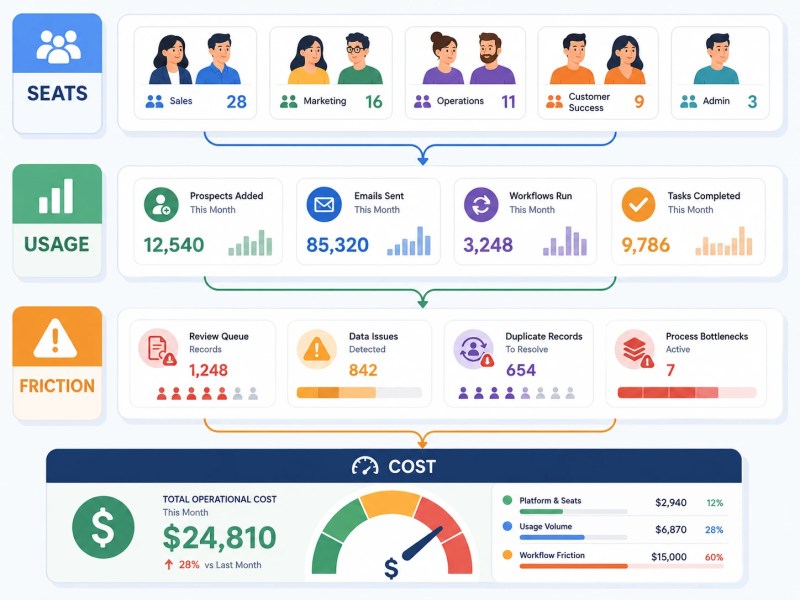
The hidden cost is usually not the platform itself. It is the cleanup after imperfect data moves into a CRM, sequencing tool, or handoff process. Many of these issues stem from the same patterns covered in our common integration mistakes guide. That is why Apollo.io cost should be reviewed together with your workflow design, not as a standalone line item. For a useful comparison point, see how recurring platform spend behaves in our cost of Zapier guide.
According to Gartner research referenced by IBM, poor data quality costs organizations an average of $12.9 million annually, much of it through operational inefficiency rather than direct software spend.
This hidden operational burden often appears after records move into CRM and sales workflows, as shown below.

If Apollo is feeding a CRM, a sequencing tool, or an internal list-building process, the pricing question becomes a systems question. As discussed in our guide on how to connect multiple systems, costs often emerge between tools rather than inside them. That is where the integration layer matters more than the license line.
Where Apollo.io cost climbs in recruitment and outbound sales
The clearest real-world example is recruitment. A recruitment firm does not use Apollo the same way a small sales team does. Candidate sourcing creates faster turnover in search lists, more frequent filtering, and more pressure on cleanup. That is where Apollo.io cost stops being about access and starts being about throughput.
In one recruitment engagement, we saw the spend make sense only after the team tied sourcing volume to actual placements and reduced manual review between sourcing and CRM updates. Before that, the account looked expensive because the workflow was still manual in the middle. That same pattern appears in our lead generation automation recruitment case study, where the business outcome improved only after the sourcing process and the handoff logic were connected.
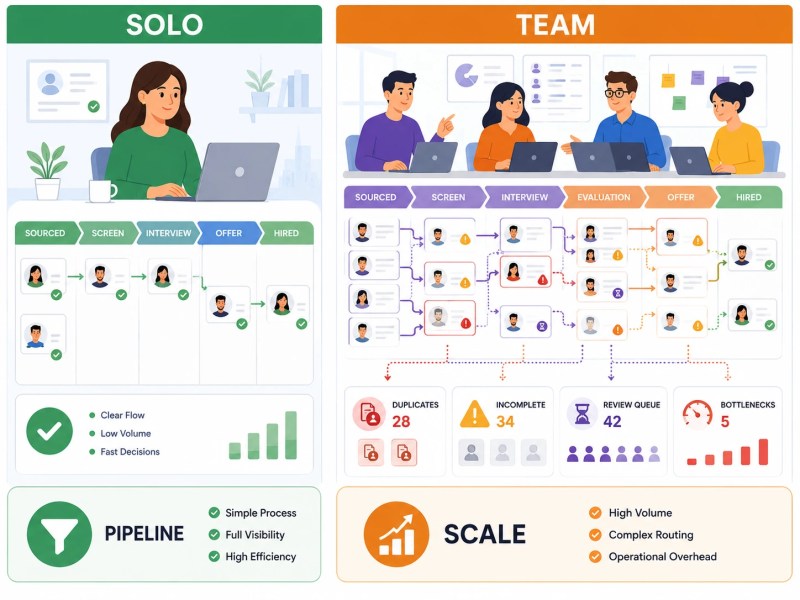
This is also where scale changes the math. A single rep can absorb friction. A team of five cannot. Once multiple users rely on the same source list, the cost of bad records and repeated exports grows faster than the subscription line does. ZoomInfo research found that inaccurate B2B contact data wastes 27.3% of a sales rep’s working time—roughly 546 hours per year—and affects the bottom line of 88% of businesses. That is why Apollo.io cost should always be checked against the volume of work it removes, not just the number on the invoice.
The comparison below shows how operational complexity increases as more recruiters and users depend on the same sourcing workflow.
What to compare before you buy
Before you judge Apollo.io cost, compare it against the whole workflow you are trying to support. If Apollo is only used for list building, the decision is narrow. If it feeds qualification, routing, and CRM updates, the buying decision becomes broader and more operational.
That is why a cost review should include the rest of the process stack. The platform may be reasonable on its own, but expensive if it adds manual review steps or breaks the handoff between tools. For the system side of that problem, our business process automation guide shows how to judge tool cost against workflow load rather than against a standalone feature list.
If Apollo is one part of a broader automation stack, do not evaluate the subscription price in isolation. Compare the amount of manual work Apollo removes from the workflow against the operational effort it still leaves behind. A useful test is to identify the sourcing, qualification, and CRM maintenance work Apollo eliminates each week. If those activities still require significant manual review after implementation, the platform may not be delivering the operational savings the subscription cost suggests.
A workflow audit can make those savings easier to evaluate before committing to a tool or process change.

When Apollo.io cost is justified
Apollo.io cost is justified when the platform removes enough manual sourcing, filtering, and cleanup to protect team time. Across the client work we’ve done in recruitment and B2B outbound sales, the best-fit cases are the ones where the team already has a repeatable process and Apollo is reducing the drag inside it. For teams evaluating the platform, you can explore Apollo here. As an Apollo Certified Expert & Solutions Partner, we typically recommend reviewing the workflow first before selecting a plan.
The platform becomes harder to justify when the team has no clear process, no follow-through logic, and no ownership for the data after export. These are some of the same issues covered in our article on common workflow automation mistakes. In that situation, the cost is not high because the product is overpriced. It is high because the workflow is unfinished.
If the objective is to lower total operating friction, Apollo makes more sense when paired with the right integration design and a structured CRM automation process. That is where automation integration services become relevant, because the real cost often sits between systems rather than inside one platform.
Final Answer: Apollo.io cost should be judged as a workflow cost, not just a subscription cost. Seats, usage, and downstream cleanup all affect the real spend. If Apollo reduces manual sourcing and keeps the handoff into CRM or outreach clean, the cost is easier to justify. If it creates extra repair work, the platform is becoming more expensive than the plan suggests.
Not sure whether Apollo fits your current workflow?
Get a free business process audit
Or review our automation audit checklist before evaluating your current workflow.
Related Resources
FAQs
What usually changes Apollo.io cost the fastest?
The fastest change is usually usage volume. Once more users, more searches, or more enrichment work enter the system, the spend can rise faster than the base plan suggests.
Is Apollo.io more expensive for recruiting teams or sales teams?
Recruiting teams often feel the cost sooner because sourcing volume turns over quickly. Sales teams may see slower growth in spend until the workflow expands beyond prospecting.
What hidden costs should teams watch?
Watch for cleanup time, extra tool handoffs, and any manual review steps created by incomplete data. According to research cited by ZoomInfo, 62% of organizations rely on prospect data that is 20–40% incomplete or inaccurate, while inaccurate contact data wastes 27.3% of a sales rep’s working time. Those costs rarely appear in subscription comparisons.
When does Apollo.io cost make sense?
It makes sense when Apollo removes manual sourcing and supports a repeatable process that already has clear ownership. If the workflow is still fragmented, the cost is harder to justify.
About the author

Miguel Carlos Arao is the Founder & CEO of Alltomate, a Zapier Certified Platinum Solution Partner focused on revenue operations workflows, prospect data systems, and CRM process design. The patterns in this article come directly from building and troubleshooting Apollo.io cost-related systems across client engagements in recruitment and B2B outbound sales.

Built by a certified Zapier automation partner
Explore more at
Business Process Automation Guide,
Cost of Zapier, and
Automation Integration Services.